

Tripwire Editorial Part Two: The Immediate and Obvious Consequences of the Iran War
The immediate result of the U.S. and Israel’s attack on Iran has led to predictable results for everyone who even casually follows Middle East politics. But the Trump team has been blindsided

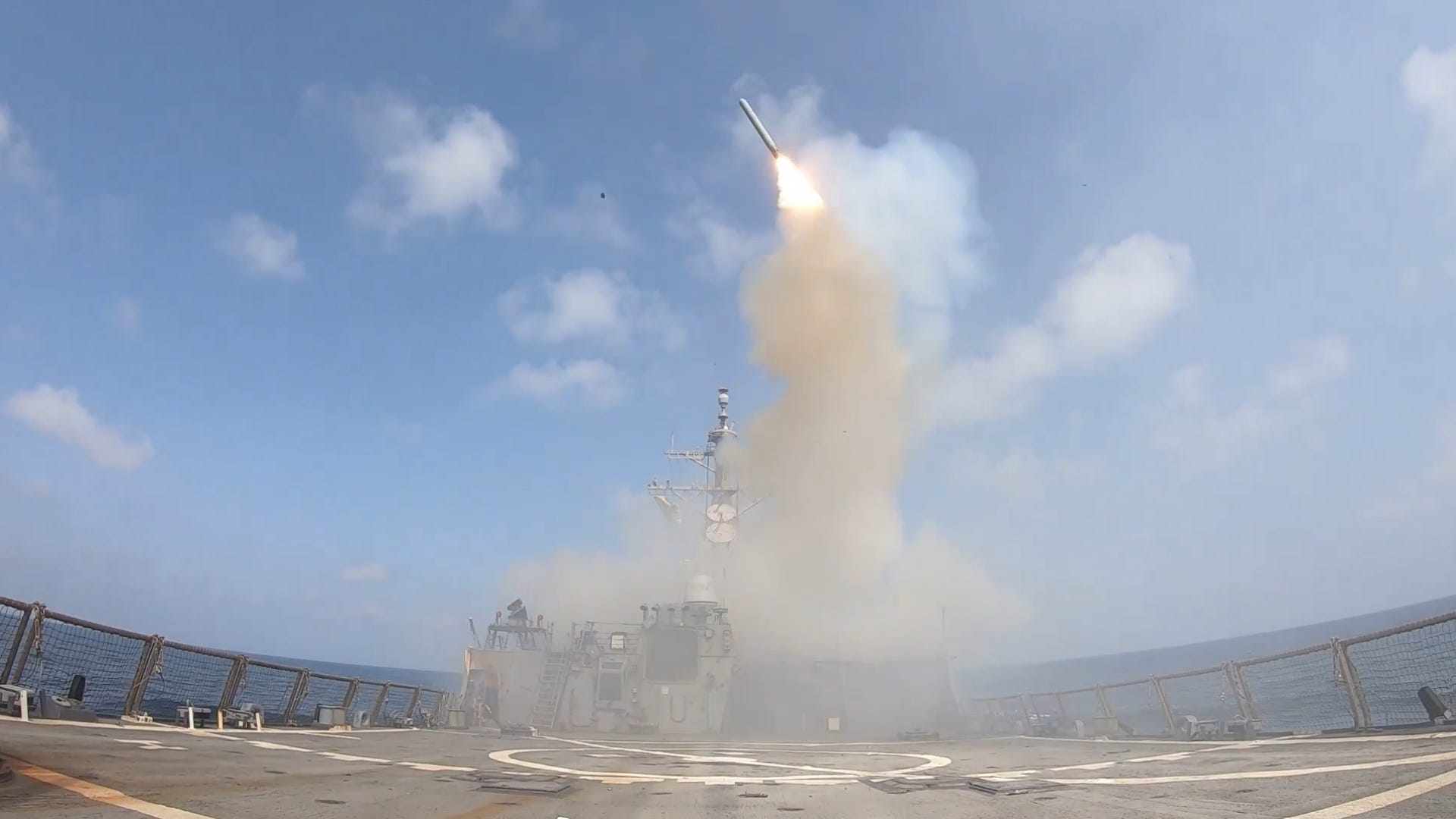
The administration of U.S. President Donald Trump has gotten itself into a war it cannot win. While top officials, including President Trump, publicly project strength, many of their actions and reporting on the situation behind the scenes suggest that the White House is panicking as everything they were warned about is coming true.
Despite his aggressive rhetoric, Trump began seeking an off-ramp almost immediately. After the immediate tactical success of his previous military operations, Trump seems to have been led to believe this one would end just as quickly. He has already floated the idea of re-opening negotiations with Iran, which Iran’s new leadership has rejected as the country has already been attacked multiple times while it was engaging in negotiations. Trump has now flip-flopped again and is saying he will not make a deal with Iran.
“There will be no deal with Iran except UNCONDITIONAL SURRENDER!” Trump posted on Truth Social. “After that, and the selection of a GREAT & ACCEPTABLE Leader(s), we, and many of our wonderful and very brave allies and partners, will work tirelessly to bring Iran back from the brink of destruction, making it economically bigger, better, and stronger than ever before. IRAN WILL HAVE A GREAT FUTURE. “MAKE IRAN GREAT AGAIN (MIGA!).””
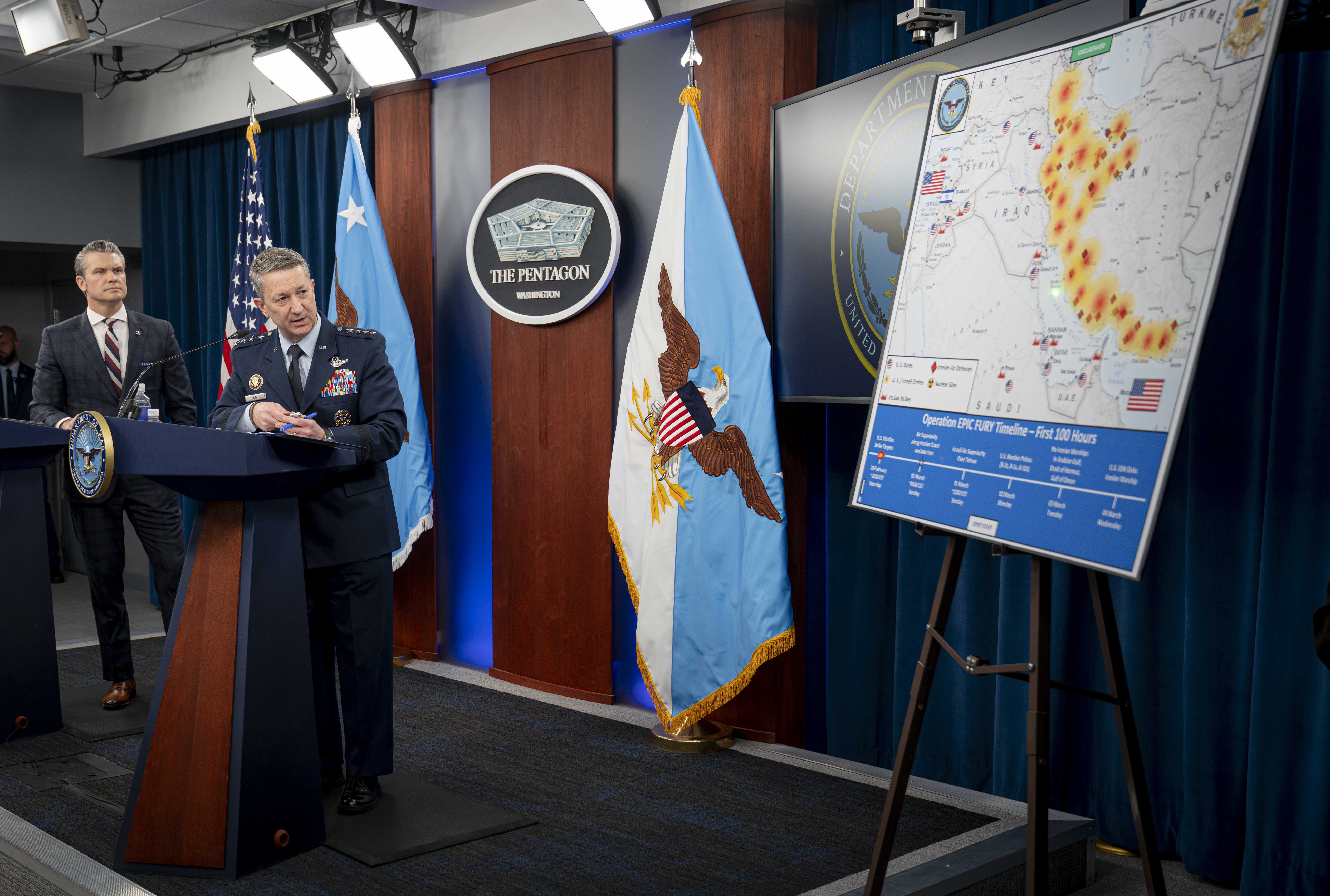
The conflict is clearly going poorly for the U.S. The military is “shifting munitions” amid reports of a critical shortage of vital ammunition, especially missile interceptors. Internally, the Pentagon is discussing the possibility that the war could last until at least September. Secretary of Defense Pete Hegseth and Secretary of State Marco Rubio are reportedly “at each other’s throats” behind the scenes as Hegseth pushes for a ground invasion of Iran.
Before the war started, there were numerous reports that senior U.S. military members, including Chairman of the Joint Chiefs of Staff Gen. Dan Caine, were warning Trump that attacking Iran was very risky and that the military was not prepared for a conflict of that magnitude. Caine is the highest-ranking member of the military and is in command of the war with Iran.
“We don’t have enough ammunition to win this war,” Caine reportedly told Trump in private. “It would not be pretty.”
The Spreading Conflict
Among the largest concerns with an American attack on Iran is the likelihood that it will spill over into other countries and turn into a regional war due to the many American bases located across the Middle East. That happened almost immediately, as Iran began attacking American bases and embassies in countries like Bahrain, Qatar, the United Arab Emirates, and Saudi Arabia. The American embassy in Riyadh and the Fifth Fleet headquarters in Bahrain are just two of many sites like this that have been bombed.
Trump also said he was “surprised” by Iran’s attacks on Gulf States, which makes no sense as Iran promised to attack U.S. bases in the region if they were attacked and because the chance of this retaliation is why American officials said they attacked Iran in the first place. Energy-related infrastructure has also been hit in several strikes, though Iran is claiming that it was not responsible and accuses Israel of launching false flag attacks.
Gulf states are now reportedly frantically calling the White House to push Trump to wind down the attack and get back to regular business, or at least to provide them with more ammunition for missile and drone defense systems before they run out and Iran has free rein to hit them as it pleases. Since the Gulf States are closer to Iran than Israel is, Iran has more weapons that can easily hit these countries. The U.S. is reportedly ignoring these requests.
Other countries that host American bases, or those of their allies, are being targeted as well, which is bringing in countries that were not party to the conflict. Iran has launched multiple attacks on the British RAF base Akrotiri in Cyprus. The attacks did very little damage, but the U.K. has evacuated personnel and is sending a ship and helicopters to defend it and Cyprus generally. France and Greece are sending forces as well. The U.S. shot down a missile headed toward Turkey on Wednesday that Iran denies firing. It also says it did not launch the missiles and drones that struck the area around Nakhchivan Airport in Azerbaijan.
Lebanon has also been dragged into the war against the will of its government. Lebanon hosts Lebanese Hezbollah, a militant group that is part of the Axis of Resistance, the network of armed groups Iran arms and directs to oppose Israel and the U.S. Hezbollah has long been a major military force in the region, but it has been pummelled by Israel over the past two years and largely disappeared from the Middle East conflict around early 2025. Hezbollah fired several rockets at Israel on Monday, and Israel has responded by conducting hundreds of airstrikes across the country, mainly on the capital Beirut, and launching a ground invasion of the country.
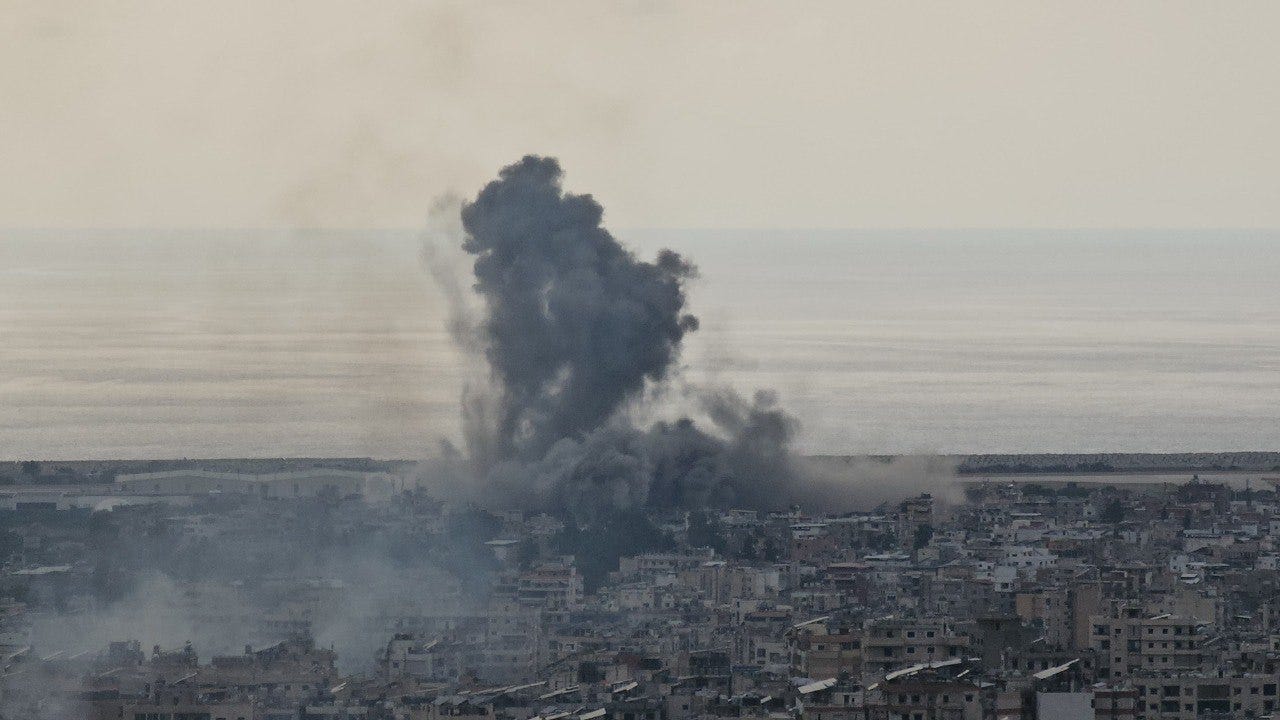
France is calling for Hezbollah to cease its attacks on Israel and for Israel to stop its retaliation. French President Emmanuel Macron is also warning Israel not to take any land after its ground forces invaded the southern part of the country. Lebanese President Joseph Aoun asked Macron to intervene to prevent a massive planned bombing run by Israel, but Israel went ahead with the attack anyway.
“Hezbollah must immediately cease its fire toward Israel. Israel must refrain from any ground intervention or large-scale operation on Lebanese territory,” Macron posted on X. “At this moment of great danger, I call on the Israeli Prime Minister not to expand the war to Lebanon.”
It is very telling that just days after declaring war on Iran, Israel has focussed so heavily on Lebanon. Hezbollah has only fired a few rockets at Israel in the current war while Iran has fired thousands of drones and missiles. It seems like one of Israel’s most important goals in the war is to once again expand its territory through force and conquest.
Israel is also attempting to foment an uprising among Kurds in the region and has apparently convinced the U.S. that this is a good idea. Both countries claimed Kurdish groups had launched a massive ground assault on Iran after receiving air support and supplies, including arms from the CIA, and Iran said it bombed Kurdish forces in Iraq. However, many reports of Kurdish involvement are now being contradicted, and many Kurdish groups say they do not plan to join on the fighting. It looks like the National Army of Kurdistan, an armed Kurdish Iranian group, may have acted alone rather than the entire Kurdish population.
The U.S. has had a very complex relationship with the Kurds, a group of 30 to 35 million people spread out across Iraq, Iran, Syria, and Turkey. The U.S. has allied the Kurds in the past to fight Iraq and former Syrian dictator Bashar al-Assad among others but has limited its support for the group and denied its ambitions to have an independent state. The Americans have armed and then sold out the Kurds eight times.
This is because Turkey, which has the second-largest army in NATO, opposes the Kurds as much of Turkey would likely become part of an independent Kurdistan. Turkey considers the Kurdish political and militant group PKK a terrorist organization and has repeatedly attacked it. This is a fine situation for Israel, which has declared that Turkey (again, a NATO member) is its next great enemy when it has finished with Iran. This tension could pull NATO apart if Israel decides to make good its anti-Turkish sentiment and forces Turkey to invoke Article 5, calling all NATO members, including the U.S., to its defence.
The U.S. has now also upset India by sinking the Iranian warship IRIS Dena in the Indian Ocean. The frigate had been participating in MILAN 2026, a naval exercise involving 18 countries. The U.S. pulled out of the exercises before the war and then ambushed the Dena with a submarine off the coast of Sri Lanka as it was returning to Iran. The U.S. also did not render any aid to the survivors of the attack, which is a violation of the Geneva Convention, and left the Sri Lankan navy scrambling to search for survivors and bodies. Iran claims the ship was unarmed and only crewed by training sailors and officers.
The Indian government has yet to comment on the incident, but it was “embarrassing” to India, according to senior and retired members of its military. C Uday Bhaskar, a former naval officer and head of an Indian security think tank, told Al Jazeera that the sinking is a “strategic embarrassment” for India that undermines its credibility as a security coordinator in the region. Less than a week into the war, completely neutral countries are being involved whether they like it or not.
The Ammo Shortage
_interceptors_is_launched_during_a_successful_intercept_test_-_US_Army.jpg)
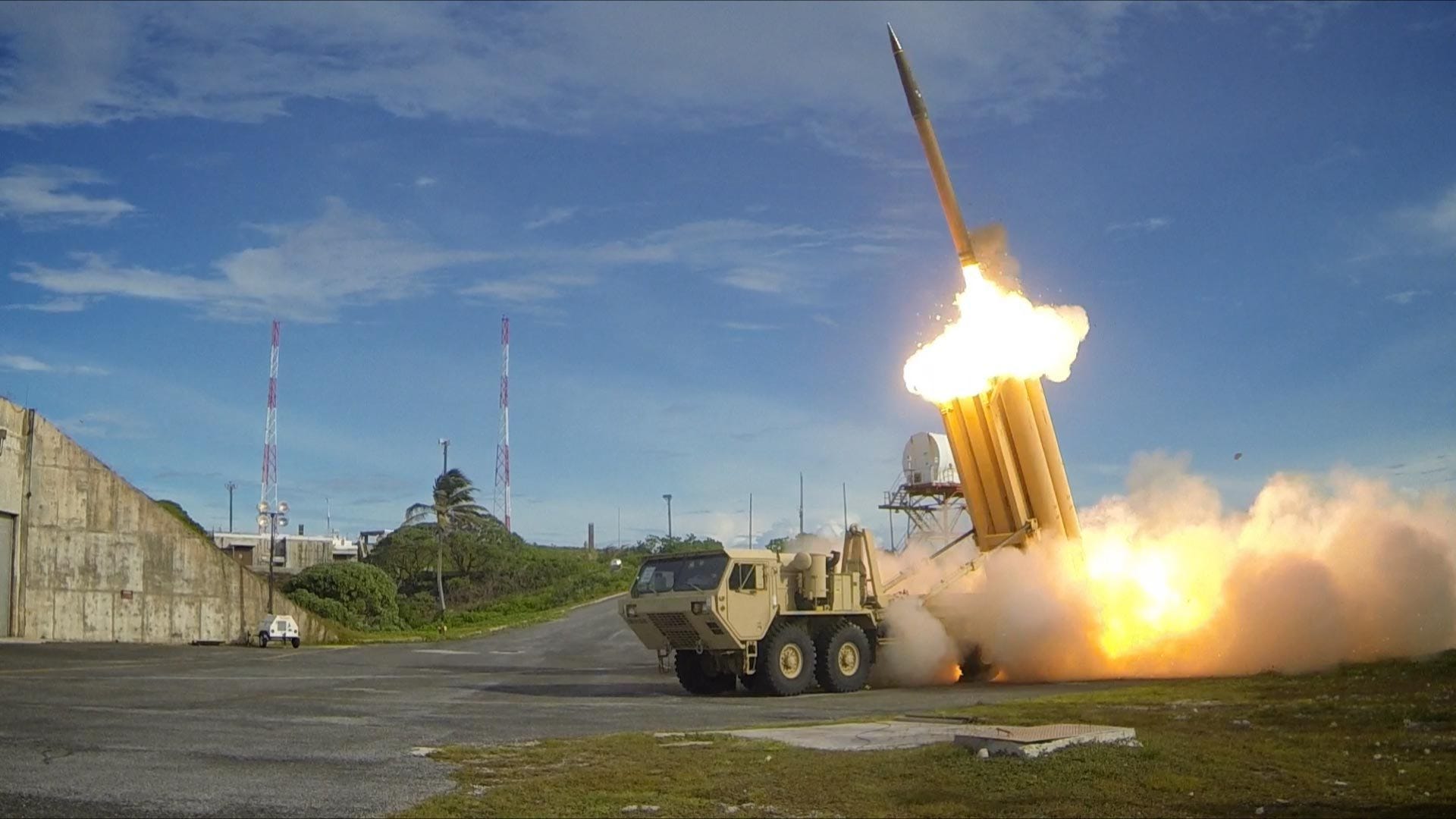
The U.S. military is experiencing a serious ammunition shortage that is already forcing adjustments in its strategy. It is desperately trying to destroy as many Iranian missile and drone launchers as possible before it runs out of its relatively short supplies of interceptor rounds. It is also reportedly running out of Tomahawk missiles. This is not a surprise to the Pentagon, which understands the limitations of its military philosophy. Trump and his unqualified team do not.
Iran’s military is not as powerful as the U.S.’s, but it understands the ways in which the U.S. is vulnerable. Primarily, this comes from the differences in weapons. The U.S. relies on very powerful and advanced weapons that are highly complex and tactically effective. This makes them very expensive and difficult to produce. Iran uses weapons that are generally much simpler, making them individually less effective, but also cheaper and easier to produce. Hegseth and Caine have both privately acknowledged that the drones are causing a bigger problem than expected.
For example, the THAAD antimissile system is among the most advanced and important in the American defensive arsenal. A single battery costs between USD $1 billion and $1.8 billion, and each interceptor costs $12.7 million. The U.S. is planning to increase its production of THAAD interceptors from 96 to 400 per year, but this was only announced in January and will require manufacturer Lockheed Martin to build a new plant from the ground up. The U.S. used between 100 and 250 THAAD interceptors during the 12-Day War, which exhausted 20 and 50 per cent of its arsenal. Issues with the Arrow 3 and SM-3 interceptors are even more dire.
By contrast, every model of Iran’s ballistic missiles cost less than one THAAD interceptor, and all but the most advanced models cost USD $5 million or less. Drones are even cheaper: a single Shahed suicide drone costs between $20,000 and $50,000. One was used to destroy a $300 million radar system at the American naval base in Bahrain.
“We have prepared for a very long war, and therefore it would be foolish to use our most effective weapons in the very beginning,” a spokesperson for the Iranian defence ministry said. “The enemy has a limited stockpile and everyone is aware of this fact.”
Facing a critical shortage of missile interceptors, just days into the conflict the U.S. is already considering moving systems based in places like South Korea to the Middle East. The defence systems have not been able to stop everything Iran has fired so far, and numerous strikes have hit American bases and sites across Israel. At least six American soldiers and more than a dozen Israelis have been confirmed dead, and both numbers are likely higher already and will almost certainly increase even more, especially if the U.S. does run out of interceptors. Their blood is on the hands of Trump and Netanyahu.
Oil and Russia
Iran has closed the Strait of Hormuz, where 25 per cent of seaborne oil trade and 20 per cent of liquefied natural gas (LNG) passes, driving global energy prices skyward. Oil is over $90 a barrel now, after being below $65 for months before the war. Several oil refineries and other energy infrastructure in the Gulf has been attacked. Trump is now saying he may deploy the U.S. Navy to escort ships through the strait.
Qatar’s state-run QatarEnergy has shut down LNG production after an attack, which pushed prices in Europe up by close to 50 per cent and in Asia by almost 40 per cent. Iraq, one of the largest oil producers in the Middle East, has also begun shutting down production due to the fighting. Experts believe the United Arab Emirates and Kuwait will be next to slow down production.
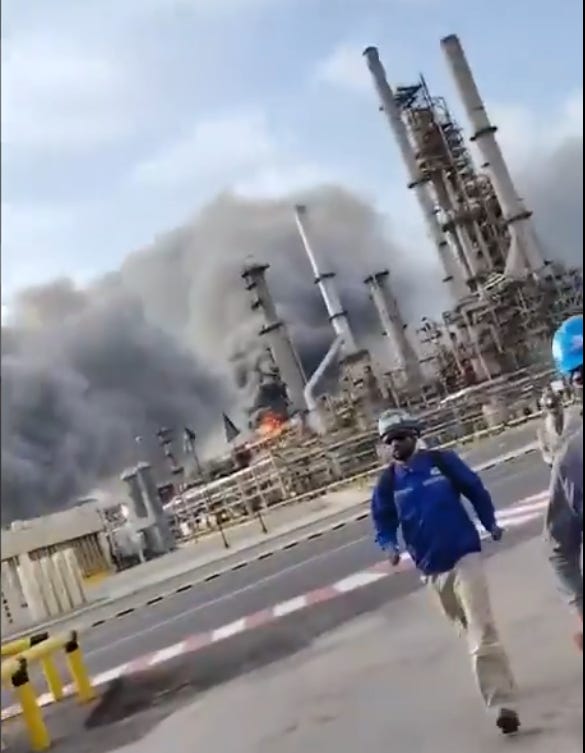
Gas prices are surging around the world, including in the U.S. When asked about rising prices, Trump had a very compassionate message for average Americans who are going to bear the brunt of this while already dealing with a massive cost-of-living crisis: “If they rise, they rise, but this is far more important than having gasoline prices go up a little bit.”
Oil prices are spiking across South Korea, which depends heavily on oil and gas imports from the Middle East. Its stock market is collapsing, which is not helped by the U.S. decision to move missile defence systems out of the country to send them to the Middle East. South Korea is one of the U.S.’s largest trading partners and the volume of goods that go between the two countries vastly outstrips the U.S.’s trade with any country in the Middle East. Yet another factor Trump did not consider and probably didn’t even know about.
European countries are already considering buying Russian oil, despite most countries and the U.S. supporting Ukraine, which is at war with Russia. The U.S. is even easing sanctions to allow India to buy Russian oil. Russia will surely use this revenue to finance its military operations in Ukraine for years to come. Russia is also providing Iran with intelligence to help them hit the U.S. military.
At the same time, every weapon used in a war of choice against Iran is one less than the U.S. can provide to Ukraine, which Trump continues to arm despite his constant rhetorical waffling on the subject. Ironically, Russia is now suggesting it will not sell oil to Europe in favour of “better markets”, so we might find out what happens if Europe actually runs out of energy.
Russia’s “three-day military operation” became a four-year war that has now surpassed the length of time the USSR was in World War Two. On Tuesday, House Speaker Mike Johnson said “We are not at war right now. We’re four days into a very specific, clear mission, an operation, Operation Epic Fury.” This is going to become their Ukraine.
Americans Just Don’t Want This War
The other main issue that the U.S. has is how unpopular the war is among its own population and the amount of disruption it can handle. Support for the war is very low in the U.S. as it is, with a new CNN poll finding that 59 per cent of Americans oppose the war while just 27 per cent approve. People and businesses will have a very low tolerance for the consequences of the war, such as dead soldiers and high gas prices. Iranians are fighting for the existence of their country, and so people will be willing and able to endure far more in order to win the war, even if the government is itself unpopular.
As Americans are once again learning, their opinions on the way their country uses its military and their tax dollars are not relevant to the tiny ruling class elite who make these decisions, knowing neither they nor their families will ever personally suffer the consequences of the destruction they wreak. Such is life under democracy.
Just like in the Iraq War, supporters of the assault on Iran cynically and absurdly accuse opponents of the war of loyalty to a foreign government. The idea that one cannot oppose both the form of a government or the actions it takes and the indiscriminate slaughter of its populace in service of conquering that country is nonsensical. The Islamist government of Iran obviously routinely violates human rights and by its own account murdered thousands of anti-government demonstrators.
Human rights abuses not an issue when it comes to Gulf states like Saudi Arabia and the United Arab Emirates, who are among the U.S.’s top allies in the world. Canada is not immune from this either: the government recently signed an agreement with Qatar to develop AI technology with the tyrannical Gulf state. But Iran is apparently such a unique evil that it justifies spending billions of dollars and sacrificing thousands of lives to destroy it.
Someone tell Renee Good and Alex Pretti that they’re shooting protestors in Iran.
And of course, Israel, the U.S.’s ally in the war, has spent the past two and a half years conducting a genocide in Gaza. Netanyahu and other Israelis have invoked ancient myths like the destruction of Amalek, a society described in the Bible as an enemy of the Hebrews, to justify its indiscriminate slaughter of the Palestinians and the unprovoked war on Iran. In the Bible, God instructs ancient Israeli and Judean King Saul to: “attack the Amalekites and totally destroy all that belongs to them. Do not spare them; put to death men and women, children and infants, cattle and sheep, camels and donkeys.” Israel has systematically targeted prominent Iranians who Trump had considered alternate leadership candidates in Iran as it seeks to turn the country into a failed state rife with civil war, like Libya was after the Americans bombed it to oblivion in 2011.
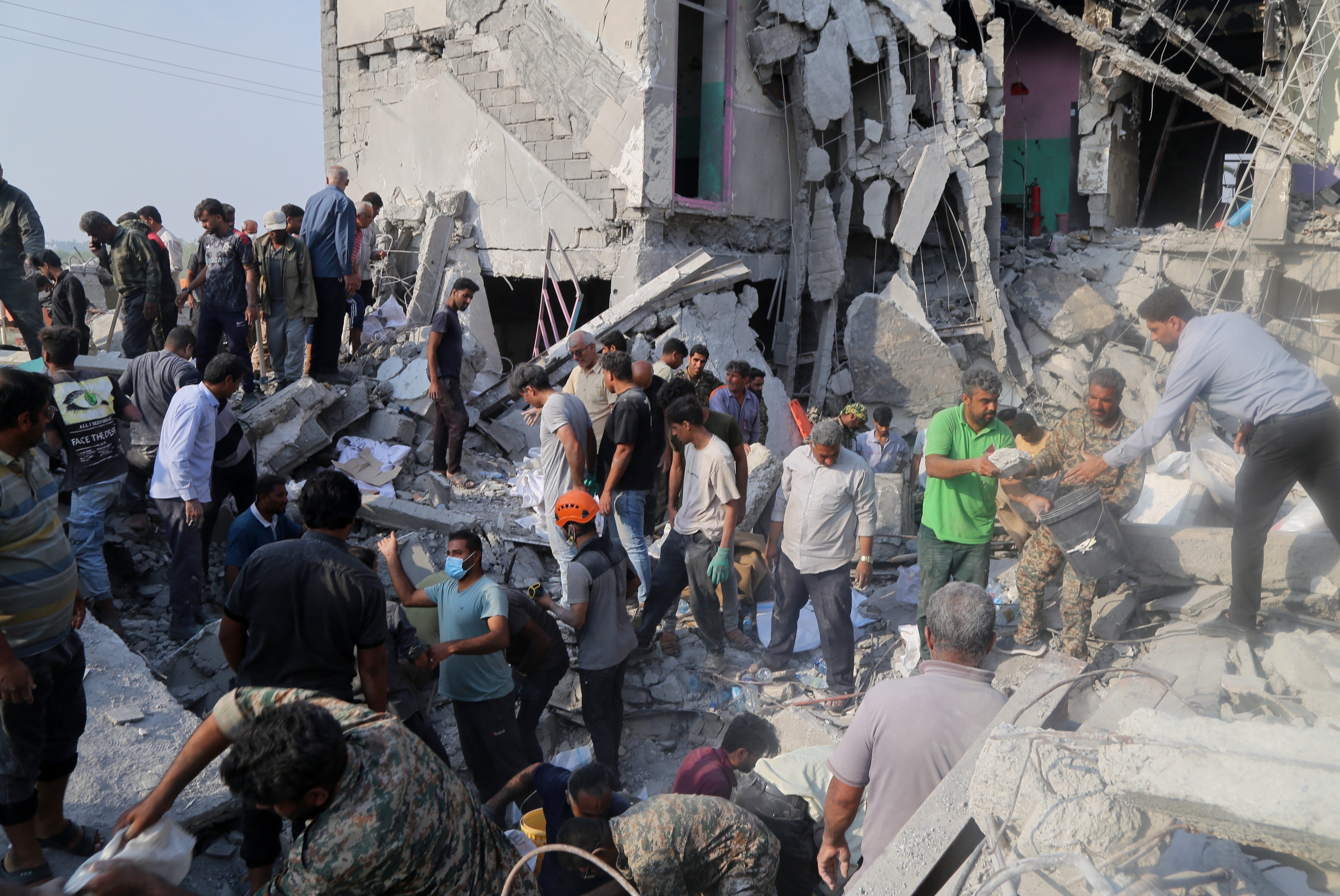
On the first day of the war, a girl’s school in Minab, southern Iran, was bombed. At least 165 people, many of them children, were killed in the attack and Pentagon investigators now believe it was probably the U.S. that conducted the attack. But they would have you believe they started the war to defend little girls like the ones they murdered. The Israelis and Americans know we can see through their lies, and they know we cannot do anything about it. Much like Putin’s enemies “mysteriously” falling out of windows, the threat is that we can all see the truth and yet we can do nothing.
.jpg)
The worst thing that the Israelis and Americans can do for the protestors is what they did: turn their opposition to the government into a frontal assault on behalf of foreign powers determined to destroy and Balkanize the country. Most Iranian protestors do not want to get rid of the government just to turn their country into an Israeli and American puppet state, but by declaring that the military assault on Iran is meant to help protestors take over the government, that is what they have achieved. Rather than foment an uprising, many Iranians who had been protesting will likely keep their heads down instead of acting as a de facto Mossad and CIA agent.
The war that Trump and Netanyahu launched is already spreading across the Middle East and destabilizing the global economy. Yet for some reason, Canadian Prime Minister Mark Carney supports this madness. Tripwire will dig into his endorsement of the attack and subsequent backtracking in Part Three: Carney Flails as Iran War Overwhelms Central Banker. Check out Part One: Trump and Netanyahu Plunge the World into Chaos here.