

U.A.E. Leaves OPEC
An important member of the oil cartel has left the group completely as negotiations between the belligerents of the Iran War go nowhere


The United Arab Emirates (U.A.E.) withdrew from OPEC, the cartel that controls a major share of global oil production, on Friday, May 1. The move comes after two months of warfare in the region brought about by the U.S. and Israel’s attacks on Iran and Iran’s retaliation against both them and American allies in the Persian Gulf, including the U.A.E.
The war began on Feb. 28 and hostilities lasted until a ceasefire was called on Apr. 7 which was meant to last for two weeks but has kept going until now. Lebanon and Israel are supposed to be part of the ceasefire as well, but the fighting between them has remained constant as Israel invades and occupies southern Lebanon to destroy Lebanese Hezbollah, a militant group allied with Iran.
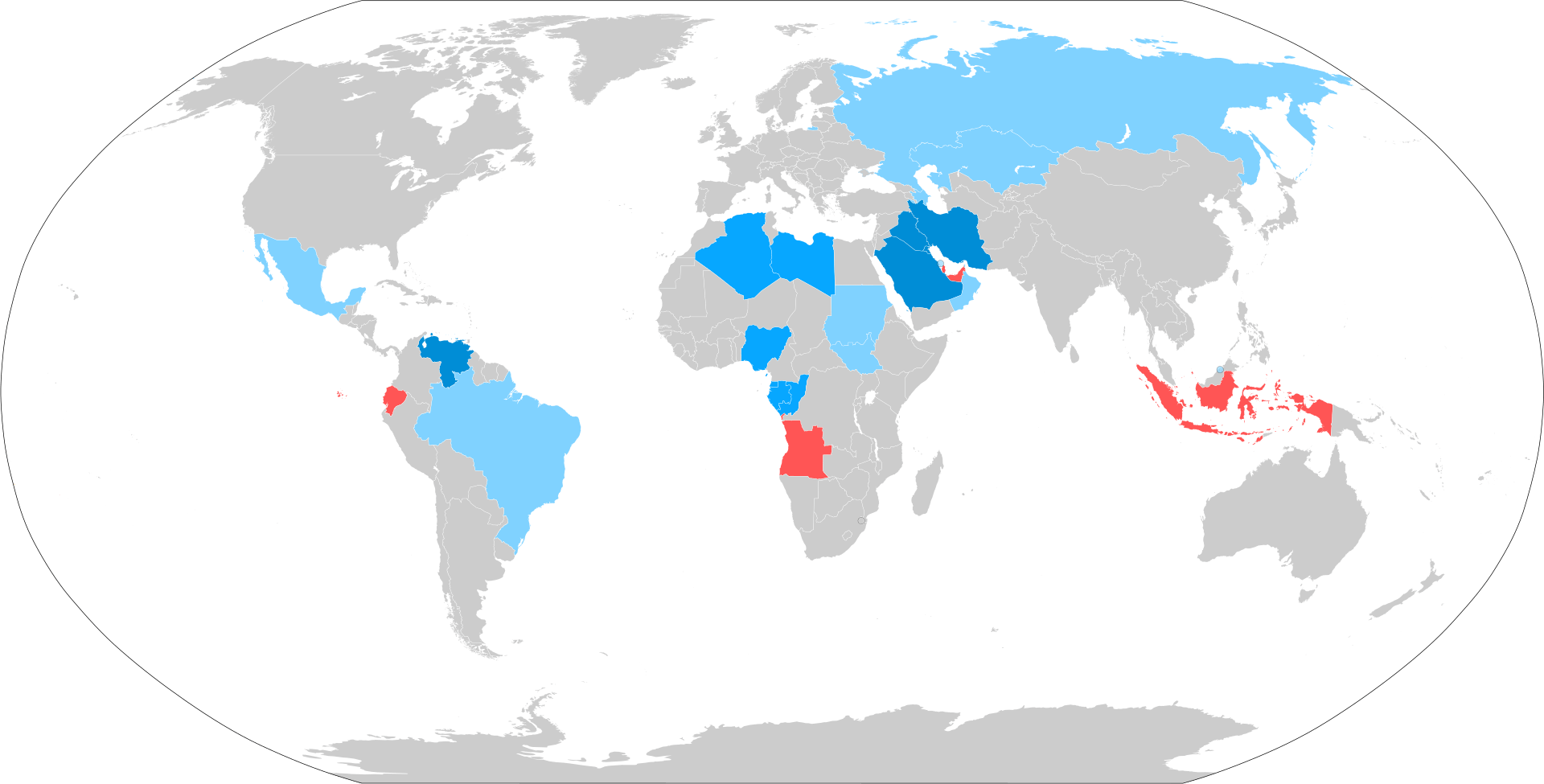
OPEC (Organization of the Petroleum Exporting Countries) is an intergovernmental cartel which governs the level of oil production for its members. The organization’s leadership determines how much each of its members will produce in order to manage the price of oil to keep it stable and avoid volatility in the market. The U.A.E. has been a member of the group since 1967.
OPEC was founded in 1960 by Iran, Iraq, Venezuela, Kuwait, and Saudi Arabia. Various countries have joined through the decades, and OPEC now also includes Algeria, Equatorial Guinea, Libya, Nigeria, Republic of the Congo, and Gabon. There is also a group of oil-producing countries that are not members but coordinate with the group, which is known as OPEC+. OPEC+ includes Russia, Azerbaijan, Mexico, Malaysia, Brunei, Sudan, South Sudan, Brazil, Oman, and Kazakhstan.
OPEC’s members represent nearly 80 per cent of global oil reserves and produce around 35-40 per cent of global oil supply. The U.A.E. represents around nine per cent of these reserves. It is also responsible for about 12 per cent of OPEC’s oil production. The U.A.E. is a swing producer, meaning it can quickly raise or lower its production levels to change global supply.
The U.A.E. is the fifth member to leave OPEC. Qatar surprisingly pulled out in 2019 in order to assert more control over its production, especially as the country became more focused on liquefied natural gas (LNG) production. Indonesia left in 2016, Ecuador left in 2020, and Angola left in 2023, all due to disputes over the limits OPEC’s quotas put on their production.

OPEC has sought to present a united front. On May 3, the organization released a statement saying that OPEC+ will increase production by 188,000 barrels per day. The statement made no mention of the U.A.E.’s departure.
Leaving OPEC means the U.A.E. can produce far more oil as it no longer has to stick to the cartel’s limits. Currently, it produces around three million barrels per day, in line with OPEC quotas. The country is aiming to increase this to five million barrels per day by 2027.
“I think it’s great,” U.S. President Donald Trump said when asked about the U.A.E. leaving OPEC. “I think, ultimately, it’s a good thing for getting the price of gas down, getting oil down, getting everything down.”
The U.A.E.’s increased production will not make a difference to the global oil market or bring prices down as long as the Strait of Hormuz remains closed. The U.A.E. is able to bypass the strait with a pipeline that goes to an export terminal in Fujairah, which is on the Gulf of Oman rather than the Persian Gulf. However, the U.A.E.’s pipeline to Fujairah has a capacity of just 1.5 million barrels per day, around half of the U.A.E.’s three million barrel-per-day production. The pipeline is operating at capacity and needs to be expanded to allow for more oil to be shipped through it at once.
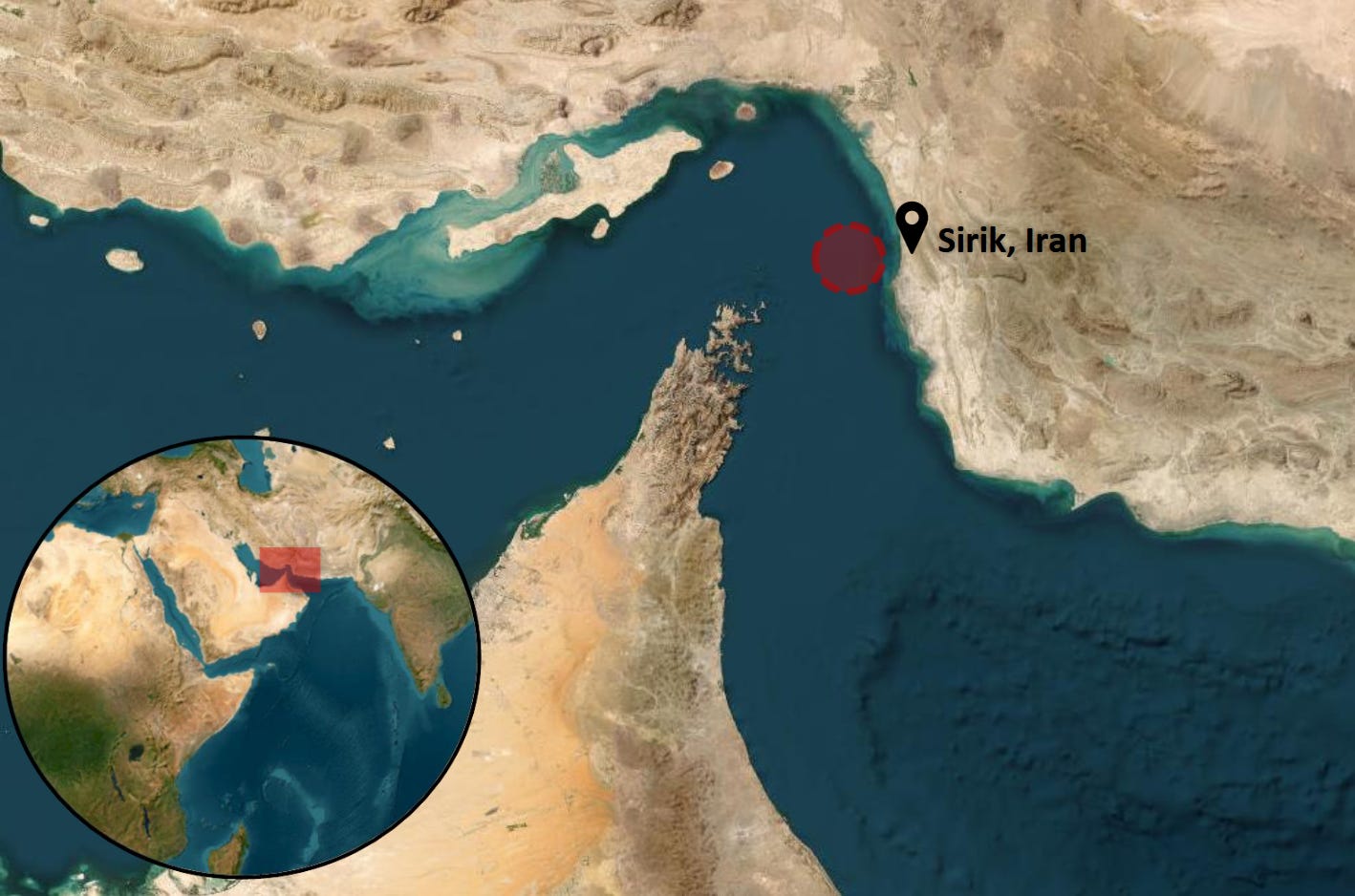
There is no sign of shipping in the strait returning to normal anytime soon. A cargo ship said it was attacked by Iranian forces on Sunday off the coast of Sirik County in Iran. The ship’s crew are all believed to be safe. More than two dozen ships have reported attacks by Iran since the war began. Iran is demanding a $2 million toll for ships to pass through the strait in order to pay for some of the damage caused by American and Iranian airstrikes. On Friday, the U.S. warned that any ships that pay the toll would be violating American sanctions on the country and could be subject to sanctions themselves.
While the U.A.E.’s sudden withdrawal from OPEC caught members and the global oil market off-guard, its exit has been rumoured for some time. The country has recently complained about OPEC’s limits on its production, and it has made major investments that have increased its production capacity which OPEC has prevented it from using.
This means that the war may simply have accelerated the country’s plans. The U.A.E. has spent decades investing profits from its oil revenue in its sovereign wealth funds, which are now estimated to be worth over $1.7 trillion. These funds have investments all over the world, meaning the U.A.E.’s income is now more dependent on stable global markets than selling oil, so high oil prices are not a benefit anymore.
The U.A.E.’s move comes as all of the Gulf states are reckoning with the long-term implications of the war on their economies. The U.A.E. and other Gulf states are pushing the U.S. for a dollar swap line, where the U.S. would exchange its currency for theirs. This would provide Gulf states with liquidity in U.S. dollars without selling off assets, effectively bailing them out.
Providing wealthy countries like Gulf states with bailouts is likely to be controversial among Americans, who are already paying high gas prices and footing a bill for the war worth over USD $25 billion. That covers the direct cost of the war, such as munitions and operations, but Democrats say the true cost to the economy is between $630 billion and $1 trillion. The Gulf states contend the U.S. owes them money for starting a war which they were not consulted about and which has led to billions of dollars in damage from Iranian attacks.
“Additional swap lines can benefit our nation by reinforcing dollar usage and liquidity internationally, maintaining smooth functioning in dollar funding markets, promoting trade and investment with the United States, and, in hypothetical stress scenarios, preventing disorderly sales of U.S. assets as well as disruptions to U.S. markets, businesses, and households,” U.S. Treasury Secretary Scott Bessent posted on X. “Extending permanent swap lines can be a major first step in creating new U.S. dollar funding centers in the Gulf and Asia.”
Asian countries like Japan and South Korea are heavily dependent on oil from the Middle East, and the shipping restrictions in the Strait of Hormuz have hit their countries especially hard. The U.S. is likely concerned that they could be desperate enough to pay Iran’s toll in order to secure vital energy supplies.
The U.S. Rejects Another Attempt at Peace
On Sunday, Trump rejected an Iranian peace proposal after discussions over the weekend. Iran had offered the U.S. a 14-point plan meant to move the talks forward, which have been stalled since American and Iranian negotiators met in Pakistan in mid-April. The U.S. has been demanding a complete end to Iran’s nuclear program, which the Iranians have refused to consider. Iran is demanding a full end to the war rather than just an extension to the current ceasefire.
“It’s not acceptable to me. I’ve studied it, I’ve studied everything—it’s not acceptable,” Trump reportedly told the Israeli outlet Kan News in a brief phone interview Sunday. He added that “the Iranians want to make a deal, but I’m not satisfied with what they’ve offered… there are things I can’t agree to”. He also said the military campaign is going “great”.
Trump reportedly also called again for Israel to pardon Israeli Prime Minister Benjamin Netanyahu, who is facing major corruption charges. Netanyahu’s court dates have been routinely postponed due to the war and many observers and critics say he is keeping the war going to avoid the consequences of his alleged criminal activities.
Al Jazeera released text of the plan, and the Iranian government publicly disputes some of the elements. Neither government has released its own text of the plan.
The 14-point plan includes a 30-day window to end the war, a mutual non-aggression pledge between Iran and the U.S. and their allies, including Israel and members of Iran’s Axis of Resistance like Hamas and Lebanese Hezbollah. It also calls for an international mechanism that would guarantee no return to war; it is not clear yet what this would be. There would be a gradual end to shipping restrictions in the Strait of Hormuz and of the American blockade of Iranian ports, and the U.S. would withdraw from Iran’s “maritime perimeter” and end its military buildup.
Iran is also willing to make the most significant concessions yet to its nuclear program. It is offering a 15-year moratorium on uranium enrichment, which falls short of the U.S. demands for 20 years but is far longer than Iran’s previous position of five years. After that, Iran would be able to enrich uranium up to 3.67 per cent purity, which is in line with use in nuclear energy and most technologies. Nuclear weapons need a purity of over 90 per cent, which is far harder to achieve. The U.S. would agree to cease its attacks on Iranian nuclear facilities.
The plan suggests that discussions over the 30-day window include deciding on the fate of Iran’s 440 kg stockpile of partially enriched uranium, which was at the heart of the American attack on the country in June 2025. The stockpile is enriched to around 60 per cent, less than is needed for a bomb but far more than is needed for any other use. Iran is suggesting that it could down-blend this uranium, which would lower its enrichment level, or export it to a country like Russia. Under the Joint Comprehensive Plan of Action (JCPOA), also known as the Iran nuclear deal which was forged under former U.S. president Barack Obama, Iran sent over 11,000 kg of enriched uranium to Russia.
“I will soon be reviewing the plan that Iran has just sent to us, but can’t imagine that it would be acceptable in that they have not yet paid a big enough price for what they have done to Humanity, and the World, over the last 47 years,” Trump posted on Truth Social on Saturday.